
Structure comes before surface
New boards cannot correct an unsound frame. Existing supports, connections, ledger conditions, stairs, and rails should be understood before selecting a finish.
Build or refresh a deck that gives you more room to sit, dine, gather, and move comfortably between the house and yard.
A worn finish or isolated board is different from rot, movement, loose rails, inadequate footings, or structural defects. Before comparing surface materials, establish which parts of the existing deck remain sound and whether the layout still fits how you use it.
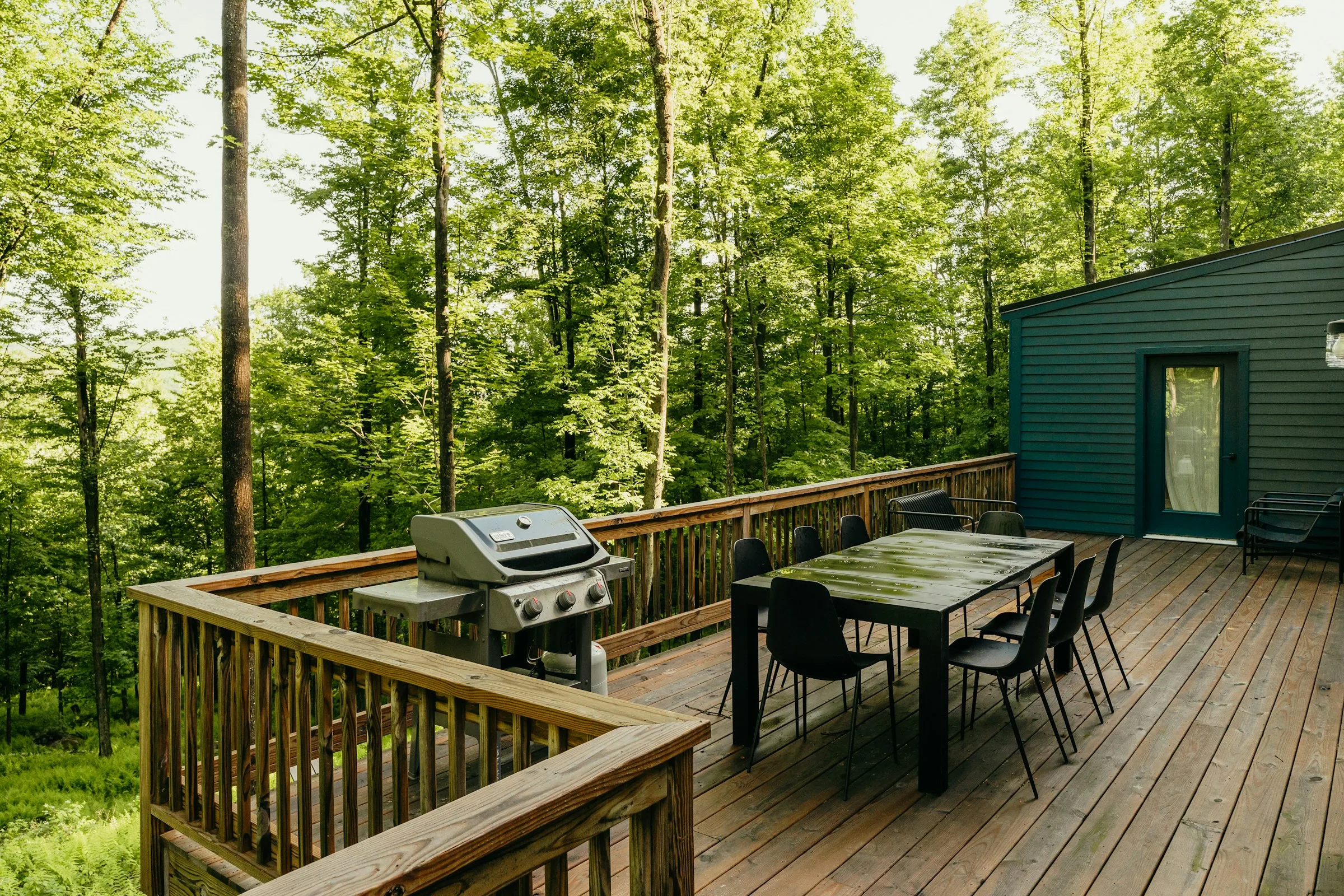
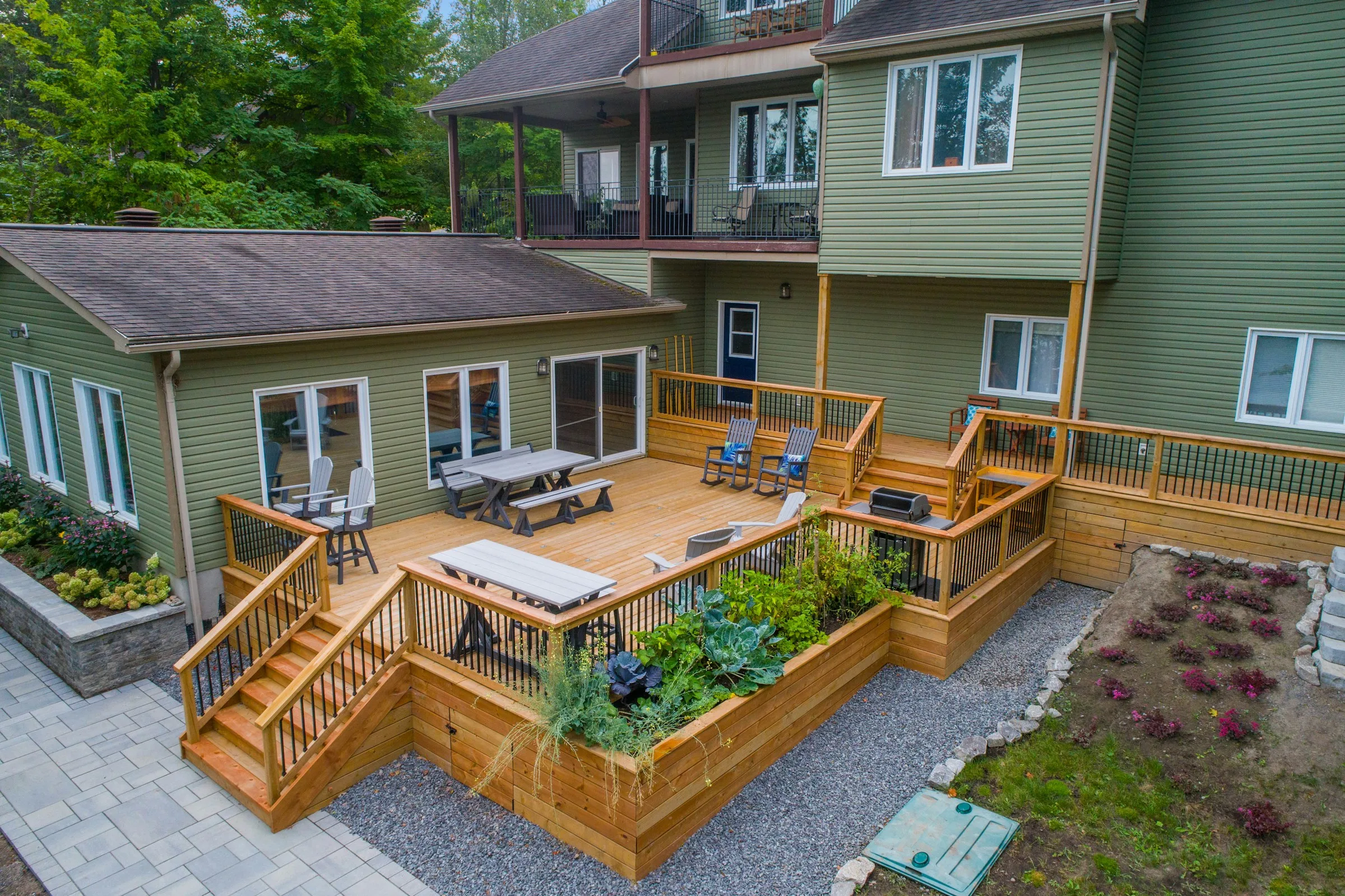
Footings, framing, ledgers, stairs, rails, ventilation, and connections establish what can remain and what a safe, useful deck plan requires.
New boards cannot correct an unsound frame. Existing supports, connections, ledger conditions, stairs, and rails should be understood before selecting a finish.
Wood and manufactured decking differ in feel, weathering, cleaning, refinishing, and upfront cost. Maintenance expectations belong in the material decision.
Doors, stairs, grills, dining space, rail views, and traffic paths help determine whether a deck’s dimensions will actually work.
We can begin with the door, existing framing, stairs, and the furniture or activities the deck should support. Photos from the yard back toward the house help show height and structure; photos from the door outward show circulation, views, shade, and where a future pergola or path might connect.
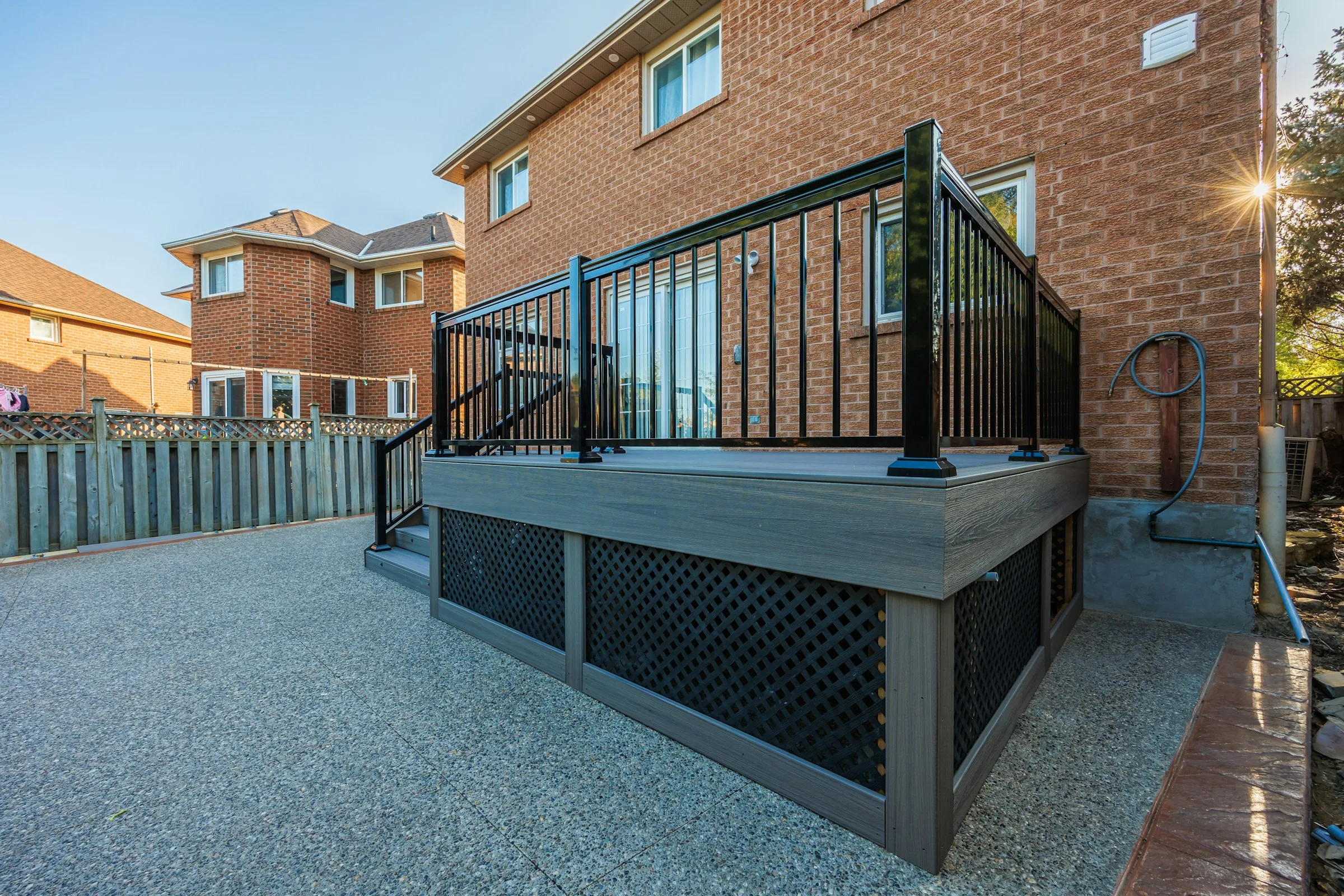
Determine what can safely remain and what needs to change.
Balance appearance, upkeep, weathering, and budget.
Size the platform, stairs, and rails around daily life.
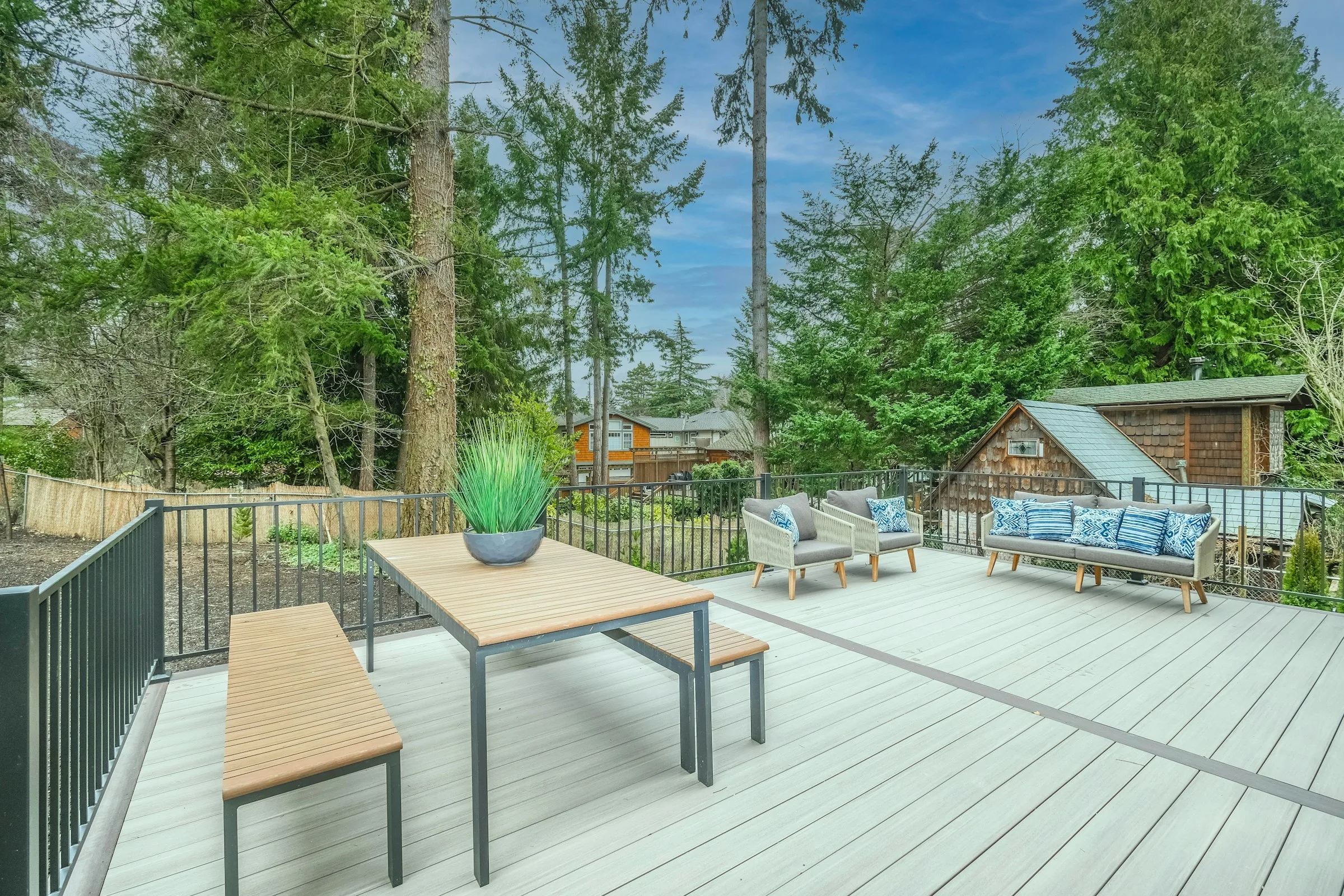
Wood surfaces may need periodic cleaning and protective finish; manufactured decking has its own cleaning and ventilation considerations. Hardware, rails, stairs, and structure still need inspection regardless of surface choice.
Tell us what you want to change or what is not working now. Share a few photos if you have them, and we’ll help you take the next step.