
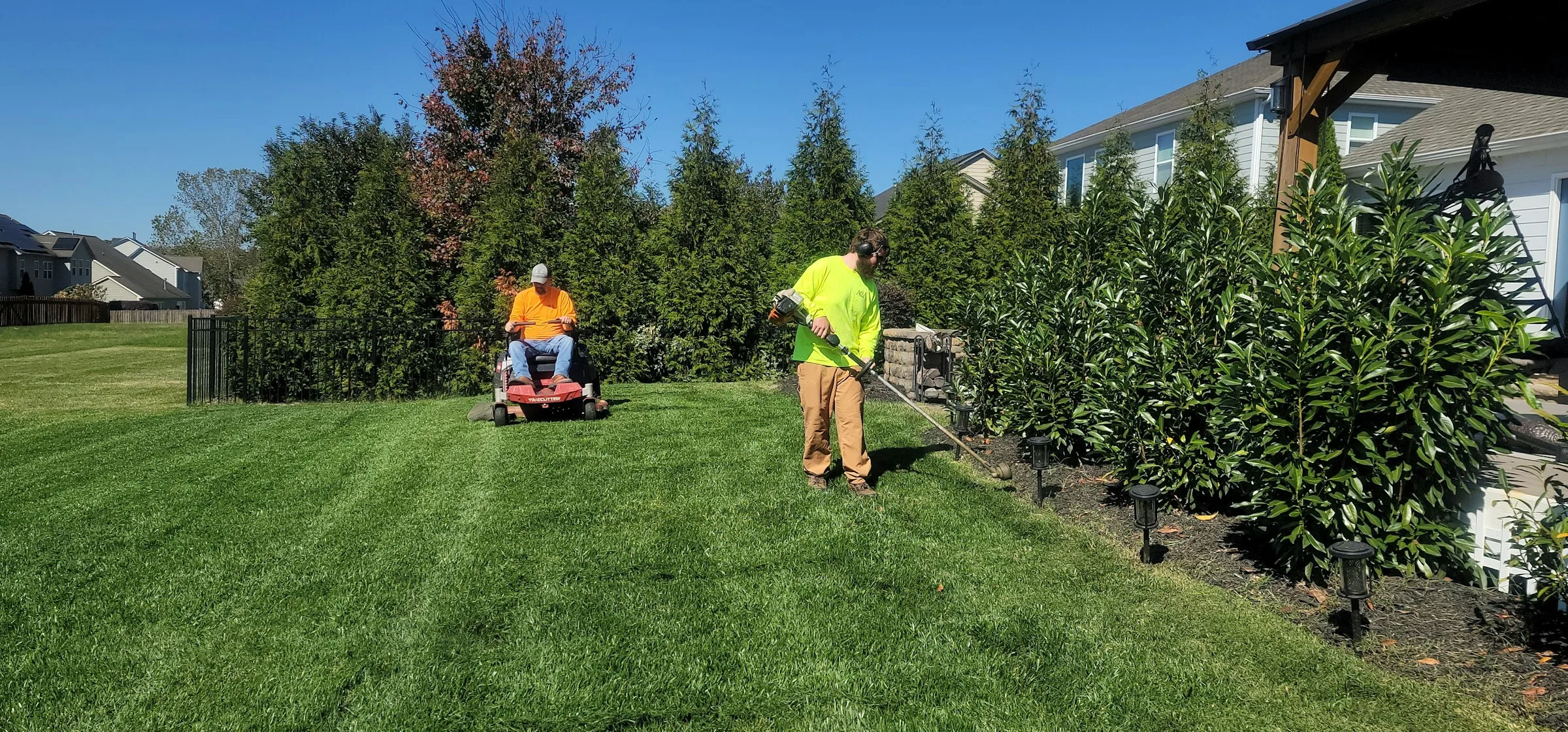
A lower-maintenance backyard is not a yard with nothing living in it. It is a yard where lawn, planting, irrigation, paths, gathering space, and service access have clear jobs—and where the weekly routine fits the time you actually want to spend outside.
Start with the work you want to reduce.
Walk through a typical growing-season week. Note the time spent mowing narrow strips, trimming awkward corners, moving sprinklers, pulling weeds along irregular bed edges, cleaning muddy routes, or working around obstacles. Then separate chores you dislike from areas you genuinely use.
Keep features that earn their upkeep. An open lawn may matter for pets or play. A garden bed may be worth seasonal care. The goal is to remove friction: unnecessary corners, mismatched irrigation, inaccessible edges, and surfaces that do not suit Salem’s wet months.
Lower maintenance begins with fewer conflicts.
A clean boundary between lawn, planting, and hardscape is easier to care for than a collection of small leftover zones. Let each part of the yard be large enough and simple enough to do its job.
Give lawn a useful, mowable shape.
Small disconnected lawn strips can require more edging and turning than one intentional open area. Where turf supports recreation, views, or flexible space, simplify the perimeter and keep gates, beds, trees, and furniture from creating avoidable obstacles.
Where lawn stays thin because of shade, traffic, saturated soil, or irrigation gaps, address the cause before repeatedly reseeding. The right answer may involve soil and drainage observations, a route change, adjusted irrigation, planting suited to the exposure, or a smaller lawn footprint. Review lawn care services as part of that decision.
Group plants and irrigation by similar needs.
Plants with different sun, water, and mature-size needs create extra work when mixed without a plan. Grouping compatible areas makes watering and pruning decisions clearer. Leave enough room for mature growth so paths, windows, fences, and equipment access do not require constant correction.
Review sprinkler coverage whenever beds, lawn, or hardscape footprints change. Overspray wastes water and can keep paving or fences wet; missed areas create hand-watering chores. A planned irrigation adjustment should support the new layout rather than preserve zones designed for the old one.
Use hardscape where a durable route or gathering area earns its place.
A walkway can replace a muddy shortcut, and a right-sized patio can keep furniture off lawn. Those features reduce one kind of upkeep but introduce cleaning, joints, edges, and drainage considerations of their own. Choose the smallest comfortable footprint that supports the real use.
Plan how rain moves from the new surface toward lawn, planting, existing paving, and the home. The Salem patio drainage guide explains why finished elevation, downspouts, and wet-season observations should shape the layout before material selection.
Sequence changes so finished work stays finished.
Map utilities, irrigation, drainage, grade work, equipment access, fencing, and future structures before installing final planting or surfaces. Work that must cross the yard belongs early in the sequence. This is especially important when a narrow Salem side yard provides the only route for materials and equipment.
Ask for a plan that distinguishes immediate improvements from future phases. A useful first phase can simplify care now while preserving elevations, access, and connection points for later work. The Salem service-area guide provides a broader look at coordinating hardscape, lawn, irrigation, fencing, and outdoor structures.
Lower-maintenance backyard questions.
What makes a backyard lower maintenance?
A lower-maintenance yard matches each area to its use and site conditions. A focused lawn, right-sized planting beds, dependable irrigation, durable walking routes, accessible edges, and room to reach equipment can reduce recurring work without turning the yard into one large hard surface.
Should I remove all the lawn to reduce yard work?
Not necessarily. A smaller, simple lawn may be useful for play, pets, or open space and easier to mow than several narrow strips. Compare how you use the area, its sun and drainage, irrigation coverage, and the upkeep required by the replacement before deciding.
Can hardscape make a Salem yard easier to maintain?
A well-placed patio or walkway can replace muddy traffic routes and define cleaner edges, but hardscape still needs cleaning, joint or edge care, and deliberate drainage. Keep the footprint tied to a real use and plan where rain will move after installation.
What should be planned before changing planting or lawn areas?
Review drainage, irrigation zones, access, utilities, mature roots, door and gate transitions, and future patio, fence, or structure locations first. Sequencing below-ground and access-dependent work early helps avoid disturbing a newly finished area later.
Make your Salem backyard easier to use and care for.
Tell Willamette Valley Landscape which chores take the most time, which areas your household uses, and what happens during wet weather. Include your address and a few wide photos to start a practical conversation.