
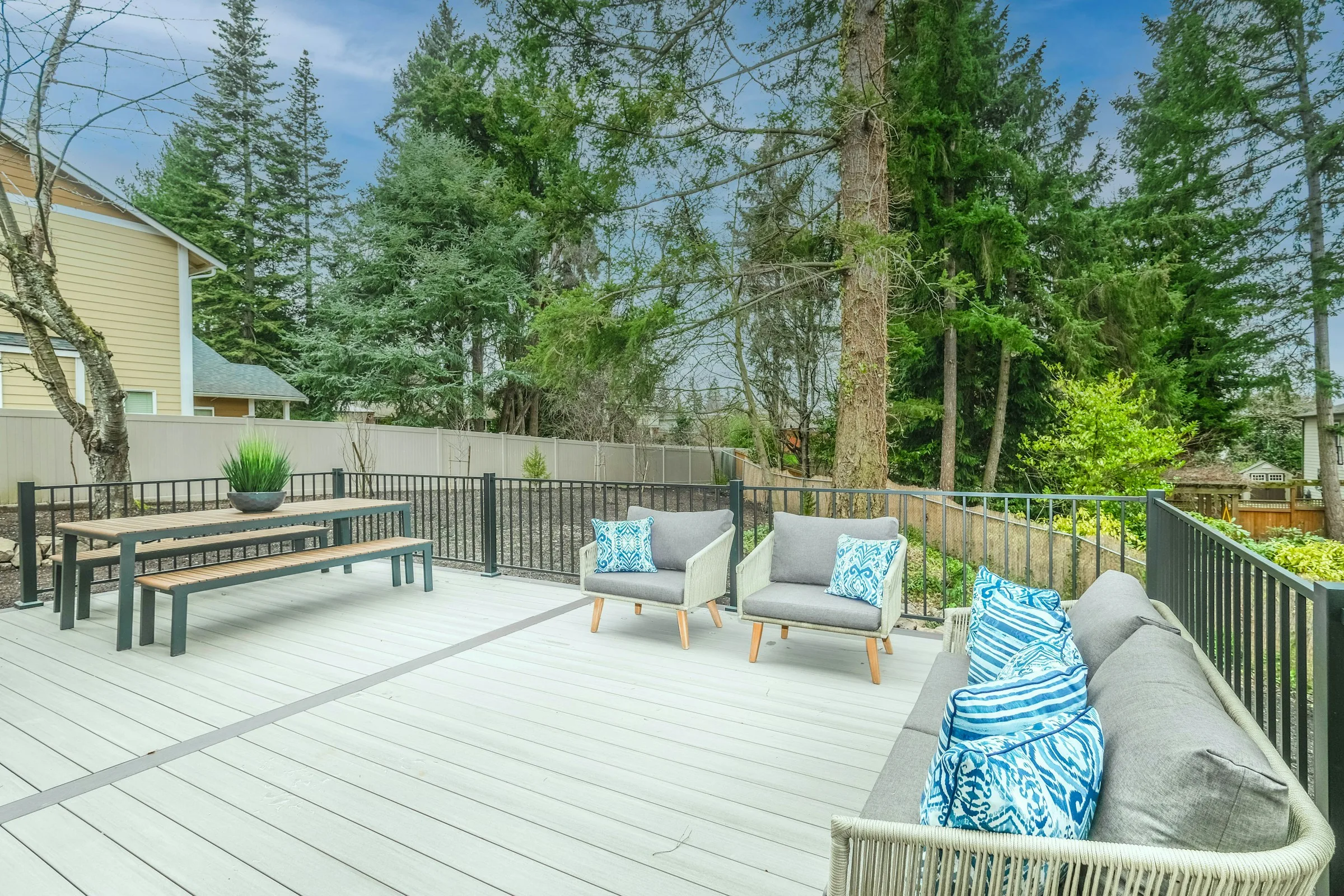
A patio surface must do more than match the house. It needs to support the intended furniture and movement, meet surrounding elevations, shed or manage rain deliberately, and age in a way that fits the maintenance and repair expectations of the household.
Define use, site conditions, and upkeep first.
Set out the furniture you expect to use and allow room for chairs and circulation. Note doors, steps, slopes, downspouts, irrigation, roots, shade, sunny exposures, and how materials can reach the yard. A finish that suits one site may be frustrating on another.
For every option, ask the same questions: How will wet traction feel? What supports the surface? How are edges held? Where does runoff go? How is a damaged or settled area repaired? What cleaning, joint care, replenishment, or sealing may apply?
Compare complete patio assemblies.
The visible finish is only one part of the project. Excavation, base preparation, drainage, finished elevation, edge treatment, access, and transitions can influence performance and cost across every material category.
Pavers offer modular patterns and repair options.
Concrete pavers come in varied sizes, textures, and laying patterns. Their modular format can make isolated lifting and resetting possible when access and matching material allow, but that does not eliminate the need for a stable base, secure edges, appropriate joints, and a drainage plan.
Ask how the selected texture feels when wet, how joints will be filled and maintained, and whether the color or surface becomes uncomfortable in direct summer sun. Curves, cuts, borders, steps, and connections to existing paving affect both the appearance and installation scope.
Concrete creates a continuous, versatile surface.
Poured concrete can form simple or custom footprints with different surface textures and finishes. Discuss control joints, transitions, traction, edge conditions, and how the slab relates to doors, foundations, lawn, beds, and existing paving.
Concrete can crack, stain, and weather; the location and appearance of future repairs may differ from a modular surface. Ask what preparation suits the site and how the proposed finish changes cleaning, traction, heat, and repair expectations.
Natural stone brings variation in color and texture.
Natural stone can create a distinctive surface, but pieces vary in thickness, texture, shape, and color. Those characteristics affect layout, joints, cutting, footing, furniture stability, and the installation approach. Review the actual material range rather than expecting every piece to match one display sample.
Ask whether the stone’s texture and joint design suit the users of the space, especially where chairs, small wheels, or mobility needs are important. Cleaning methods and any sealer recommendation should be specific to the stone and completed installation.
Gravel works best where loose material fits the routine.
Gravel can suit informal sitting areas, garden paths, or transitional zones when the layout provides suitable preparation and containment. It may not suit every dining chair, wheel, slope, or doorway. Consider tracking, displacement, weeds, replenishment, and how debris will be removed.
Choose the gravel size and edge as part of one system. A sample held in the hand does not show how the finished depth feels underfoot or how the material stays in place at lawn, planting, gates, or adjacent hardscape.
Review samples in the light and weather the patio will receive.
Look at material outside, in sun and shade, and when dry and wet if practical. Compare texture underfoot, glare, color variation, joint appearance, and how the finish relates to the home. Then return to the site plan: footprint, elevation, runoff, base, edges, access, and care still determine whether the material is a good fit.
Use these hardscape questions to ask before booking in Salem to connect a surface decision with patios, walkways, retaining features, and project sequencing. For wet-weather considerations, read the focused guide to Salem patio drainage and site preparation.
Patio material questions.
What is the best patio material for rainy Oregon weather?
There is no single best material for every property. Traction, drainage, base preparation, slope, joints, shade, intended use, access, repair expectations, and maintenance all matter. Compare complete assemblies for the same site and use rather than choosing from rainfall alone.
Are pavers easier to repair than poured concrete?
Individual pavers can sometimes be lifted and reset, while a continuous concrete surface is repaired differently. The practicality and appearance of either repair depend on the cause, base condition, edge stability, matching material, access, and extent of movement.
Is gravel a low-maintenance patio material?
Gravel avoids some characteristics of a rigid surface, but it still needs containment, weed management, replenishment, and occasional raking. It can shift under chairs or wheels and track toward doors, so it should be evaluated against the way the space will be used.
Does every patio need sealing?
No universal sealing schedule fits every material or installation. Ask what the selected product manufacturer and installer recommend, what a sealer is intended to change, how it affects appearance and traction, and what preparation and future reapplication may be required.
Compare patio materials for your property and routine.
Tell Willamette Valley Landscape how you want to use the patio, which finishes you are considering, and what the yard does during wet weather. Include the address, approximate dimensions, access route, and wide photos.