
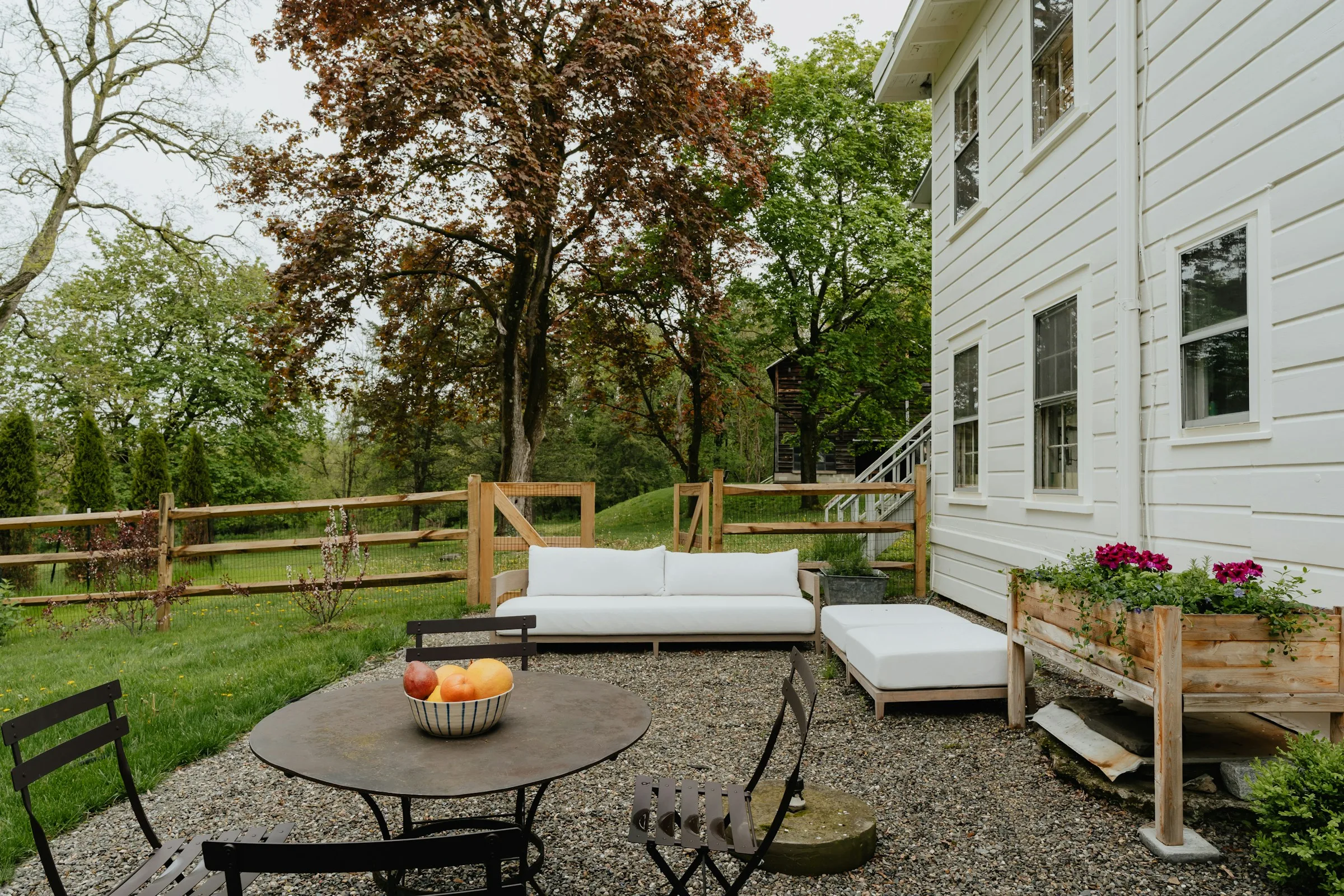
The strongest hardscape questions connect the visible feature to its job. A patio may need to make dining comfortable, a walkway may need to replace a muddy route, or a retaining feature may need to manage a grade change. Once that result is clear, you can compare preparation, materials, timing, and cost on equal terms.
What does “hardscape” include in this proposal?
Hardscape covers built outdoor elements rather than living lawn and planting. Patios, walkways, steps, retaining features, and gravel areas can all fall within that category. Yes, hardscape includes pavers—but choosing pavers is only one decision inside a larger plan.
Ask which visible features and supporting tasks are part of the proposal. Removal, excavation, base preparation, drainage-related work, edge restraint, transitions, cleanup, and restoration can matter just as much as the final surface. The hardscape service overview explains how these pieces work together across a yard.
Name the result before naming the material.
“A stable path from the back door to the gate” gives the conversation a measurable purpose. “A paver project” names a material category without explaining what the finished space must do.
How will this Salem property shape the work?
Look beyond the proposed footprint. Doors, foundations, slopes, existing paving, roots, irrigation, downspouts, gates, utilities, and the route for equipment and materials can change how a project is designed and built. Wide photos are more useful than a close-up alone because they show the surrounding elevations and connections.
Wet weather can reveal runoff paths, puddles, and soft access that are easy to miss on a dry appointment. Ask where water comes from, how the new surface will shed it, and where it can go afterward. For a focused review, read how Salem rain changes patio and walkway planning.
What is included, excluded, and allowed to change?
A low total and a high total may describe different projects. Compare written dimensions, demolition, excavation, prepared base, drainage work, finish material, edges, steps, delivery, equipment access, hauling, cleanup, and restoration. Ask who handles each responsibility and whether taxes, permits, or other applicable fees are included.
Unknown conditions sometimes appear only after removal or excavation. Before booking, ask how a change will be documented, priced, and approved. A clear process protects the decision without pretending every buried condition can be known in advance.
Dimensions
Confirm the footprint, thicknesses, steps, borders, and transitions being priced.
Preparation
Identify removal, excavation, base materials, compaction, and disposal.
Water + edges
Clarify slopes, drainage-related work, joints, containment, and adjoining surfaces.
Responsibilities
Review access, utilities, permits when applicable, cleanup, restoration, and exclusions.
Why does the proposed material fit the way you will use it?
Pavers, concrete, natural stone, and gravel differ in more than appearance. Compare wet traction, furniture stability, comfort for wheels and mobility needs, joints, edge treatment, heat in exposed areas, cleaning, repair, and how the material meets the home and landscape.
Ask to compare the complete assembly—not just finish samples. A modular paver surface, a poured slab, and loose gravel each need an appropriate footprint, elevation, preparation, and drainage plan. The guide to patio materials for Willamette Valley weather offers a question-by-question comparison.
What needs to happen before work starts?
A useful schedule separates lead time from time on site. Design decisions, material selection, availability, utility locating, permits or inspections when applicable, and coordination with irrigation or other outdoor work may all happen before installation begins.
Ask for the expected sequence and the assumptions behind it. Weather, saturated access, discovered site conditions, and material changes can affect timing. A responsible answer explains dependencies instead of promising the same duration for every yard.
What maintenance and warranty terms apply after installation?
Hardscape reduces some landscape tasks, but it does not remove upkeep. Cleaning, joint or infill care, weed and organic-growth management, drainage checks, stain response, sealing when appropriate, and attention to movement can vary by material and exposure.
Ask for maintenance guidance tied to the selected system. Also ask whether a workmanship or manufacturer warranty applies, what it covers, what it excludes, how long it lasts, and how to report a concern. The existence and terms of any coverage should be confirmed in writing rather than assumed from a product name.
For a wider view of footprint, access, sequencing, and feature types, continue with the seven hardscape questions Salem homeowners should ask before booking. The Salem landscaping page connects hardscape decisions with irrigation, lawn care, fencing, decking, and other outdoor work.
Quick answers before booking hardscape in Salem.
What does hardscape include?
Hardscape generally means the built, non-living parts of an outdoor space. Depending on the project, that can include patios, walkways, steps, retaining features, gravel areas, and the prepared base, edges, and transitions that support them. Confirm the exact features and responsibilities included in your written scope.
Does hardscape include pavers?
Yes. Pavers are a common hardscape surface for patios and walkways. They are one option among materials such as poured concrete, natural stone, and gravel. The right choice depends on use, site preparation, drainage, traction, repair expectations, appearance, and maintenance—not the material name alone.
What should be included in a Salem hardscape estimate?
A useful estimate identifies the dimensions and materials along with removal, excavation, base preparation, drainage-related work, edge restraint, steps or transitions, access assumptions, hauling, cleanup, restoration, exclusions, payment terms, and how changes will be approved.
How long does a hardscape project take?
Timing depends on scope, access, excavation, site conditions, material availability, weather, inspections or approvals when applicable, and coordination with other work. Ask for the expected sequence, what must happen before the start date, and which conditions could change the schedule.
What should I ask about hardscape warranties?
Ask whether any workmanship or manufacturer warranty applies, what it covers, how long it lasts, what is excluded, what maintenance is required, and how a concern is reported. Do not assume material coverage and installation coverage are the same; request the applicable terms in writing.
Ready to discuss hardscape for your Salem property?
Tell Willamette Valley Landscape what needs to work better, how you want to use the area, and what you have noticed about grade, water, access, and existing surfaces. Add approximate dimensions and wide photos to start a focused estimate conversation.